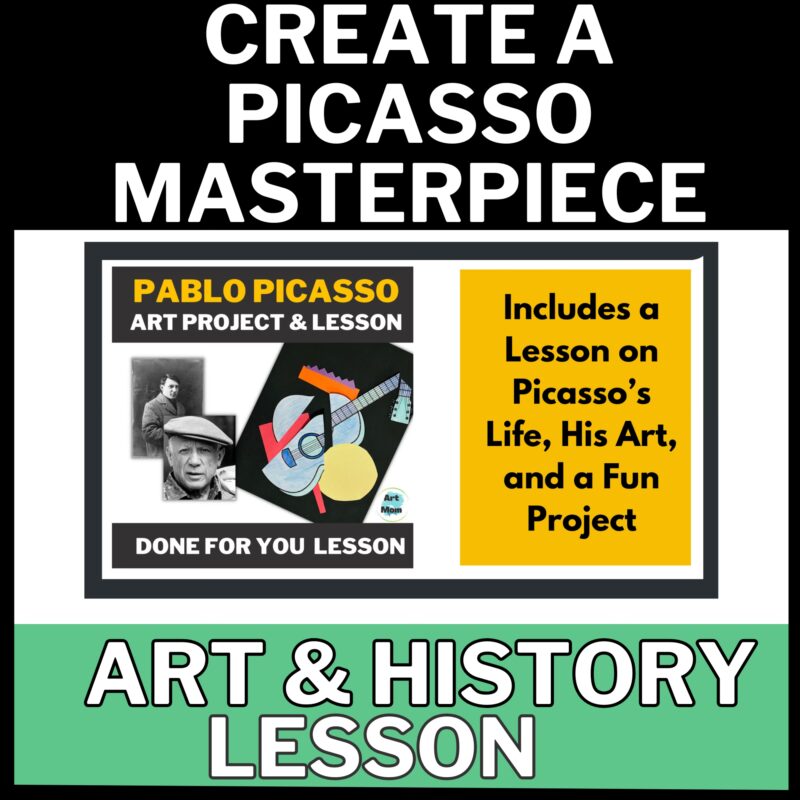
Looking for an engaging art lesson that introduces students to a famous artist while encouraging creativity? A Pablo Picasso art lesson is the perfect way to combine art history with hands-on learning.
Many elementary students enjoy creating artwork that is colorful, unique, and a little bit unexpected. That’s exactly why learning about Pablo Picasso and the art movement known as Cubism is so much fun. Picasso challenged traditional ideas about art and encouraged people to see the world from different perspectives.
In this Picasso-inspired art lesson, students learn about the artist’s life, explore his distinctive style, and create their own Cubist guitar masterpiece.
Who Was Pablo Picasso?
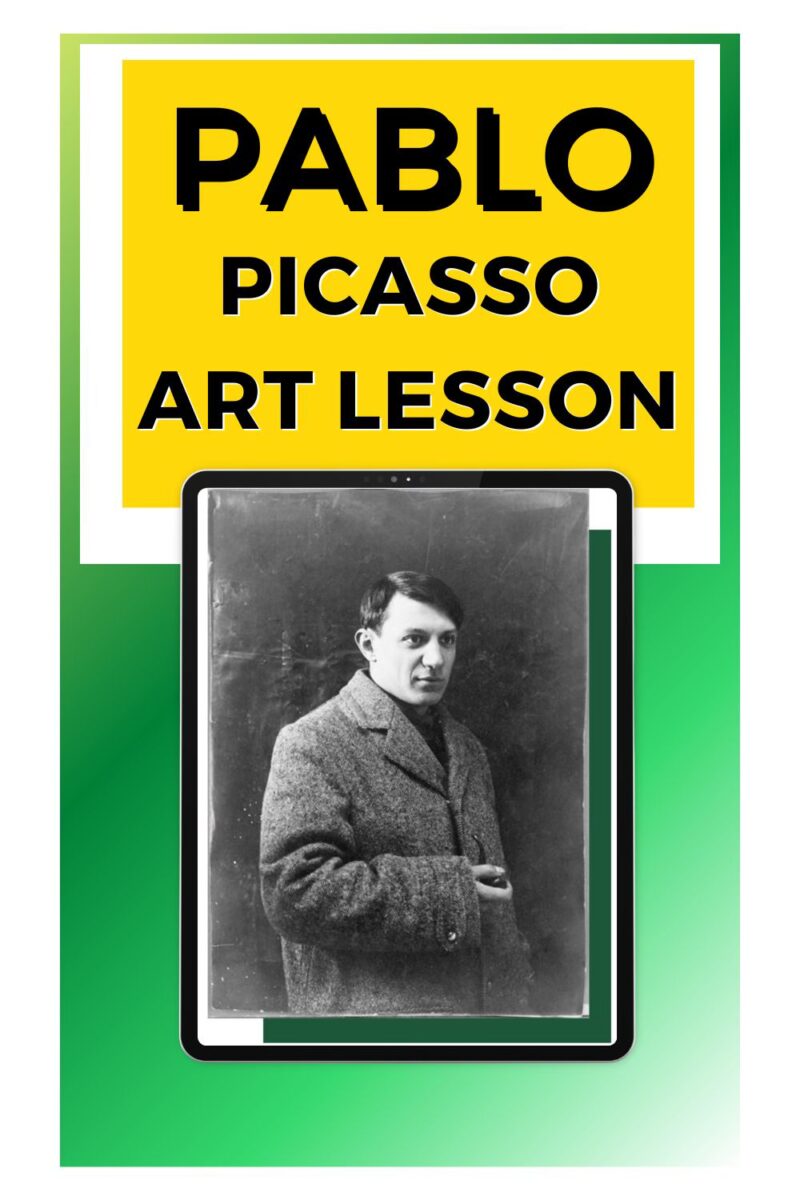
Pablo Picasso was one of the most influential artists of the twentieth century. Born in Spain in 1881, Picasso showed artistic talent from a very young age. His father was an art teacher who recognized his son’s abilities and encouraged him to develop his skills.
Throughout his long career, Picasso experimented with many different artistic styles. Rather than sticking to one way of painting, he continually explored new techniques and ideas.
Some of the art styles Picasso is known for include:
- Realism
- Collage
- Cubism
- Surrealism
- Abstract Art
His willingness to experiment and try new things helped make him one of the most famous artists in history.
What Is Cubism?
Cubism is one of Picasso’s most well-known artistic styles.
Before Cubism, artists typically painted objects from a single viewpoint. Picasso and fellow artist Georges Braque began experimenting with ways to show multiple viewpoints at the same time.
Instead of painting a guitar, face, or object exactly as it appeared, Cubist artists broke objects into geometric shapes and rearranged them.
The result was artwork that looked fragmented, abstract, and creative.
Characteristics of Cubism include:
- Geometric shapes
- Multiple viewpoints
- Overlapping forms
- Bold designs
- Unusual perspectives
- Abstract representations of familiar objects
For students, Cubism offers a wonderful opportunity to think creatively and see everyday objects in a completely new way.
Why Teach Picasso in Elementary School?
Teaching students about famous artists helps them understand that art comes in many forms. It also encourages creative thinking and self-expression.
When students learn about Picasso, they discover that there is no single “right” way to create art.
Because Cubism focuses on creativity rather than perfection, students often feel more comfortable taking artistic risks and trying new ideas.
A Hands-On Picasso Cubism Project
After learning about Picasso and Cubism, students can apply what they have learned through a fun art project.
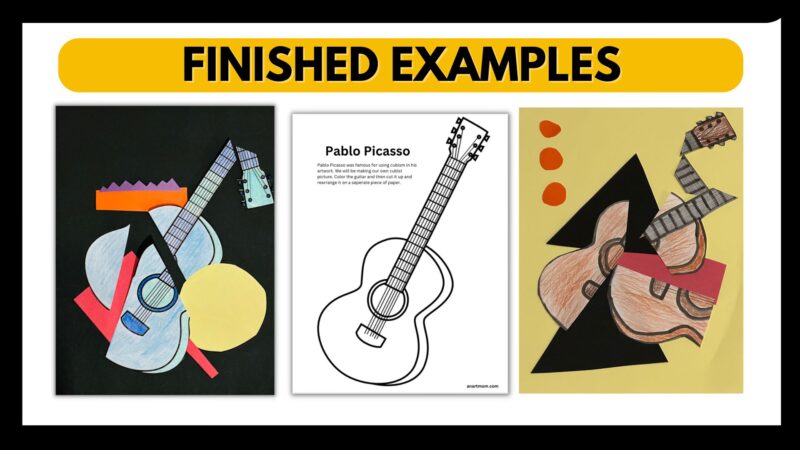
In this lesson, students create their own Cubist guitar inspired by Picasso’s artwork.
Students love seeing how different each finished guitar looks. Even though everyone begins with the same template, every project becomes a unique work of art.
What’s Included in This Picasso Art Lesson?
This complete art lesson was designed to make teaching Picasso easy, whether you’re an art teacher, classroom teacher, homeschool parent, or substitute teacher.
The resource includes:
Slideshow Presentation
The slideshow introduces students to:
- Who Pablo Picasso was
- Where he grew up
- His artistic journey
- Famous works of art
- Different art styles he explored
The presentation includes talking points and lesson notes to help guide classroom discussion.
Cubist Guitar Project
Students receive a guitar template that makes the art activity simple to implement while still allowing plenty of room for creativity.
The template helps students focus on applying Cubist techniques rather than worrying about drawing an instrument from scratch.
Design Worksheet
Before creating their final artwork, students can plan and sketch their ideas using the included design worksheet.
This encourages thoughtful artistic decision-making and helps students visualize their project before beginning.
Finished Examples
Sample projects help students understand the assignment while inspiring their own creative ideas.
PDF Version of the Slideshow
A PDF copy of the presentation is included for easy printing and classroom use.
Perfect for Art Teachers and Substitute Plans
One of the best features of this Picasso lesson is its flexibility.
The lesson works well as:
- An elementary art lesson
- A classroom enrichment activity
- An art history unit
- A homeschool art project
- Volunteer art parent
- A substitute teacher lesson plan
Because everything is included and ready to use, teachers can quickly implement the lesson without spending hours preparing materials.
Substitute teachers especially appreciate having clear instructions, guided discussion points, and a structured project that keeps students engaged.
Ideal for Grades 3 – 5
This Cubism project is designed with upper elementary students in mind.
Third, fourth, and fifth graders are at the perfect age to:
- Learn about famous artists
- Understand artistic styles
- Experiment with abstract concepts
- Apply creative thinking skills
The lesson balances art history with hands-on learning, helping students stay engaged throughout the activity.
Homeschool families also find this lesson useful when studying famous artists or incorporating art into their curriculum.
Fun Facts About Pablo Picasso
Want to make your lesson even more interesting? Share these fun Picasso facts with your students:
- Picasso created thousands of works of art during his lifetime.
- He began drawing at a very young age.
- His first word was reportedly “pencil.”
- He experimented with many different artistic styles.
- Picasso’s full name contains more than twenty words.
- He continued creating art well into his later years.
- His work helped change the way people thought about art.
Students are often amazed to learn how productive and creative Picasso was throughout his life.
Bringing Art History to Life
Art history becomes much more meaningful when students have the opportunity to create artwork inspired by the artists they study.
Rather than simply memorizing facts about Picasso, students gain a deeper understanding of Cubism by applying the concepts themselves.
As they design and build their own Cubist guitars, students begin to understand how Picasso viewed shapes, perspectives, and artistic expression.
The result is a lesson that combines history, creativity, critical thinking, and fun.
Inspire Creativity with a Picasso Art Lesson
If you’re looking for an engaging elementary art project that introduces students to one of history’s most famous artists, this Pablo Picasso Cubism lesson is an excellent choice.
Students will learn about Picasso’s life, discover what makes Cubism unique, and create a colorful guitar project they will be proud to display.
Whether you’re teaching in a classroom, homeschool setting, or need a ready-to-go substitute plan, this lesson provides everything you need to make art history exciting and memorable.
By the end of the lesson, students won’t just know who Picasso was—they’ll experience the creativity and innovation that made his artwork famous around the world.They are prepared, capable, and ready to shine.